
What is our inquiry question?
What if (self-picked) strategies can be successfully implemented to improve overall mindfulness for a specific person?
What are our sub questions? (What do we need to find out in order to answer our inquiry?)
SQ#1: What factors in the client’s lifestyle and personal life contribute to a lack of mindfulness?
Individual mindfulness is just that, individual. Personal. The ability to perceive yourself and others in the present moment. A great asset to achieving a constant positive outlook on life, yet, a mental skill that not many people are able to fully use to the best of their ability. Many factors ‘play a part’ in determining how we perceive life, particularly our lack of direction in the sense of purposeful progress. Our health, certainly, highlights the body’s dependency of positive connection in order to actively function. Successful blogger and media entrepreneur, Henri Junttila, speaks from personal experience as he retells his own story of finding his mindfulness; eventually leading to his career of identifying the passions of others and acting on them, since 2009. His ‘obstacles’ of mindfulness, consist of maintaining the effort to keep going, the consequences of distractions, how progress doesn’t come quickly, the possibility of giving up, a division between goals and mindfulness, forgetting the journey is the destination and the mentality of often wanting to be anywhere but ‘the here and now’ (Junttila, 2019). He insists that the present is worth living in ‘as connected as possible’. Psychological, mental, physical, spiritual, educational, occupational, emotional and even identity-related factors can contribute to a lack of mindfulness. Mindfulness is not achieved through means of simply wanting to be mindful; it’s what you will do with this ability once you have it. The first step to take in order to gain your mindfulness begins when you find the right purpose.

SQ#2: What do clients look for in a ‘suitable’ strategy?
Everyone is their own person and we all prefer different things. The term ‘suitable’ is loosely defined as there is no sole response to accurately answer the question for all of us. What makes a good strategy, however, is when people create them from inspiring personal experience and pass it on to help others after they move on, much like the passing on of wisdom and history between the elderly and youth of the world. Experience grows confidence and the unwavering certainty that you are not alone. Individuality is used to distinguish and celebrate the uniqueness about everyone, yet that doesn’t isolate someone for being too unique. We all may be different; from opposing racial or religious backgrounds, to the stereotomy of gender superiority or age. Difference can also include our approach to achieve our goals and how we think. But it is these differences that connect us, not divide us; it’s what helps us learn to lean on each other. Henri Junttila’s own website, ‘Wake Up Cloud’, serves as an inclusive, safe and respectful environment for people searching for their passion/s; a place where he believes that he can ‘change lives’ (Junttila, 2019). By exploring life his way and later passing it on through his writing, many diverse groups of people have found his strategies and advice to be ‘suitable’ to helping them. Finding a suitable strategy for anything, mindfulness included, shouldn’t discourage you from looking because of you being an individual, but rather, you being you is what will best connect you with the right person and the right solution.

SQ#3: What creates a variety of options in tackling a lack of mindfulness?
A variety of strategies are created due to there being a variety of people. Everyone has their own ideas, feelings, experiences, customs or ideals about everything, so it makes sense to believe that the way we live our lives (if documented) could benefit those of future or inexperienced generations. Henri Junttila admits that, ‘I was afraid of what people would think…I was afraid, and I was confused,’ (2019). Starting the journey to find or achieve your mindfulness starts when you are comfortable about the diversity of which you proudly and deservingly represent. Find a connection, between people, between ideas or between goals; you’ll find the strategy you’re looking for. Even before he became a successful media entrepreneur, Junttila had to find that connection as well, stating that he was ‘on a path to discovering what life and business is truly about’. He found his mindfulness strategy through awareness of diversity’s positive presence and can now help other people struggling to do the same.
“I was afraid and I was confused. But I found a way through my fears, and I began my journey. It wasn’t easy, but if I can do it, so can you. And on this website and in whatever I produce, I share the techniques and strategies that helped me start doing work I truly love.” – Henri Junttila, 2019

Why did we choose this topic?
Mental and emotional health is a large psychological aspect that contributes to making humans behave and respond the way that we do; a development amongst the endless possibilities of mental health to which, as a whole, intrigued my partner-Kimberley-Jean- and I. Mental health determines the way we ‘think, feel and act’ in the face of life’s challenges (2014). It’s a way that we see ourselves, our lives and the lives of others. Our emotional health can affect natural intuition, heightening of senses, managing stress and social interactions and us being good decision-makers. However, despite this dimension of health’s importance to our lives, many methods of dealing with the complexity of human emotions has yet to be efficiently introduced.
And this ‘hole-in-the-works’ of such an important topic, is what inspired Kimberley-Jean and I to visually create a roster of highly recommended and self-picked strategies for the clients who wish to be a part of our six week trialling program, as well as keeping clear mindfulness to emotional situations our main goal.

What do I need to know for this intervention to work?
To achieve a successful outcome to the program, there are many varying factors that must be taken into account.
- What is mindfulness?
Say it with me. Mind-ful-ness. Mindfulness. NOT mental health.
It’s true that mindfulness plays an important contributing role to your mental health, but it doesn’t define your emotional well-being by its organised lonesome. In order to progress forward, we must first make it clear that we are not focusing on mental health as a whole, but rather isolating certain psychological elements that can be distinguished, categorised and acted upon through specified and practiced strategy.
2. What are strategies?
Strategies are customized, creative solutions that are specifically designed to solve a certain problem or situation, depending on the person.
3. How do we choose our own mindfulness strategies? How is it best to implement these changes into another’s lifestyle?
The selection of strategies must be accurate in the sense that a positive and expected outcome will occur. However, the client and the intervention must be able to work together in identifying particular aspects of mindfulness to focus on.
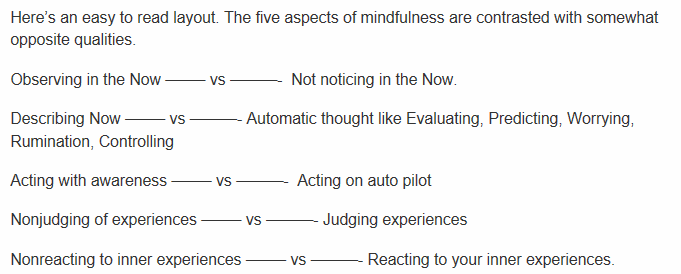
Our questionnaire will narrow down the selective process of suggested strategies depending on a client’s response to their own mindfulness; maintaining the idea that the clients ‘self-picked’ their own strategies.
4. What way can I document my progress?
Our program will be documenting our clients’ journeys through the use of weekly feedback, questionnaire responses and graph plotting of the six trailing weeks. The graphs measure in happiness and visually represent the effect of the program on the client’s lifestyle.
Who do I need to liaise with to make this intervention safe, meaningful and possible?
Consult with the clients beforehand in order to receive consent to undergo the program, be aware of medical advice or limitations, the clients’ preferred strategies and of any free-time between their work and personal life.
What resources do we need?
Taking into account the variety of mindfulness strategies and the diversity of structure, resources for this program will be both generic for the topic and specific for a client’s self-picked strategies.
Current strategies are:
- Use of music and auditory devices
- Opportunities for creativity; educational workshops, crafts, sketching or design
- Regular physical exercise
- Take an interest in your hobbies; do what you love
- Methods of relaxation
- Therapeutic body communication; use of simple (but effective) breathing techniques
- Time management and organisational skills; calendars, phone reminders
- Being a friend to yourself and toning down the inner hypocrite
- Mobile Apps
- Consult with your doctor or medical professional
The program will consist of four strategies; each with their own resources.
The first day on the list, Food and Family Fridays, will be a day of social interaction and games. Resources will be people, favourite board games within the household. Sunday Sleeps, will consist of a strict sleep schedule featuring naps and long sleeps. Resources will be an eye mask, schedule (picked by client) and a good dream. Meditation Mondays will be a day of simple mind-clearing exercises. Resources will be a yoga mat and headphones (so you can play either soothing music or your favourite playlist). Lastly, on Wacky Wednesdays, the client will trial a pampering day and activities they do not regularly do. Resources will include x6 facemasks, bubble-bath and a book of the client’s choice.
How am I feeling about this action project at this point in time?
In response to this program, I am very excited to start and create a mindfulness journey for clients, but the complexity and amount of strategies implemented into each lifestyle is going to become very hard to keep track of.
When are we going to deliver the presentation?
The presentation will be delivered from the 26th of April to the 6th of June2019, so as to feature a six week trialling period for the program.
What are my specific key responsibilities from here and on the day?
As the program is being trialled by two people at once, Kimberley-Jean and I will each take responsibility for one client’s mindfulness journey and responses. We each must collect information on the client’s progress from Week 1 to 6, in order to emotionally document the experience, as well as evaluate each client’s weekly progress with a different strategy; taking into account more preferred or successful strategies to continue on with. We also have the responsibility to update each other on both clients’ journey.
URLS:
7 Obstacles to Mindfulness and How to Overcome Them
About Henri


